
Essential Graphic Design Tips for Social Media Marketers and Solopreneurs
Essential Graphic Design Tips for Social Media Marketers and Solopreneurs
Category: Graphic Design | Read Time: 6 min read | Author: Cybro Editorial Team
Introduction
A highly detailed technical guide covering essential graphic design tips for social media marketers and solopreneurs. Learn best practices, step-by-step instructions, and optimization tips to elevate your digital assets. This detailed guide will walk you through the key concepts, step-by-step workflows, common pitfalls, and practical solutions.
Table of Contents
- Understanding the Core Principles of Essential Graphic Design Tips for Social Media Marketers and Solopreneurs
- Technical Frameworks and Best Practice Workflows
- Why Local Client-Side Execution Beats Legacy Server Methods
- Critical Traps and How to Avoid Common Implementation Pitfalls
- Frequently Asked Questions (FAQ)
- Conclusion
Understanding the Core Principles of Essential Graphic Design Tips for Social Media Marketers and Solopreneurs
Optimizing digital spaces is critical for modern content creators. When exploring essential graphic design tips for social media marketers and solopreneurs, developers, designers, and creators must address structural constraints. For example, applying native browser performance methods is far superior to pulling large external server runtimes. By focusing on local threads, your workflow is insulated from connectivity errors, data rate bottlenecks, and platform stability issues. This guarantees that your assets are compiled in milliseconds with flawless precision.
To get the most out of your files, consider establishing a continuous quality pipeline. By standardizing crop grids, optimizing color depth palettes, and maintaining transparent transparency, your end-users will experience pristine performance across all devices and screen widths.
Technical Frameworks and Best Practice Workflows
To build a robust content architecture, you must adopt standardized execution loops. First, isolate your target assetsâ€â€whether graphics files, text documents, or YouTube URLs. Second, configure optimization metrics (such as custom scaling ratios, font bounds, and clean query patterns) using lightweight web structures. This systematic pipeline prevents excessive browser memory consumption, stabilizes hardware-accelerated processing canvas routines, and ensures your output meets professional performance standards.
To get the most out of your files, consider establishing a continuous quality pipeline. By standardizing crop grids, optimizing color depth palettes, and maintaining transparent transparency, your end-users will experience pristine performance across all devices and screen widths.
Why Local Client-Side Execution Beats Legacy Server Methods
Traditional web tools rely heavily on remote server-side scripts. This architecture incurs heavy network traffic overhead, places user privacy at high risk, and subjects you to recurring subscription cost structures. In contrast, leveraging client-side WebAssembly, Canvas render matrices, and local cryptographic libraries offloads 100% of the computing workload onto your device's physical hardware. This model guarantees instant output, works perfectly offline, and protects sensitive user keys and file headers from external eyes.
To get the most out of your files, consider establishing a continuous quality pipeline. By standardizing crop grids, optimizing color depth palettes, and maintaining transparent transparency, your end-users will experience pristine performance across all devices and screen widths.
Critical Traps and How to Avoid Common Implementation Pitfalls
When managing visual media or technical data structures, creators frequently commit three critical mistakes: 1. Over-compressing starting assets, which destroys crucial detail layers and looks unprofessional. 2. Ignoring aspect ratio proportions, which leads to awkward image squishing and stretching on responsive frameworks. 3. Neglecting metadata optimization, which lowers SEO search tracking and ruins search visibility. Always establish clean, responsive fallback matrices to keep your visual brand cohesive and compliant.
To get the most out of your files, consider establishing a continuous quality pipeline. By standardizing crop grids, optimizing color depth palettes, and maintaining transparent transparency, your end-users will experience pristine performance across all devices and screen widths.
Standard Optimization Guidelines Matrix
| Parameter | Standard Metric | Optimized Goal | Impact Factor | | :--- | :--- | :--- | :--- | | File Resolution | Original High-DPI | Web-Optimized Aspect | High LCP Improvement | | Compression Ratio | 80% Web Quality | Lossless WebP/PNG | 90% Size Reduction | | Data Transfer | Client-Side Loop | Secure Local Buffer | 100% Privacy Safeguard |
Expert Tips for Maximizing Utility Output
- Source High-Resolution Assets: Always start with the highest possible visual baseline. Local processes work best when they can interpolate from clean pixel inputs.
- Leverage Modern File Extensions: Convert older formats (like heavy bitmaps) to WebP or PNG transparent grids to save storage.
- Clear Your Browser Storage Periodically: To keep local engines performing at peak speeds, clear your cache once a month to reset browser-allocated RAM thresholds.
Common Mistakes to Avoid
- Uploading Sensitive Material to Random Cloud Platforms: Always double-check if your tool operates locally or forces server uploads.
- Ignoring Mobile Layout Constraints: Ensure your banners, templates, and text overlays are scale-optimized for small phone resolutions.
- Forgetting Metadata Parameters: Keep search engine trackers active by adding optimized alternative text tags and correct titles.
Frequently Asked Questions (FAQ)
Is Essential Graphic Design Tips for Social Media Marketers and Solopreneurs completely free to use on Cybro?
Yes! All Cybro utilities run 100% locally inside your browser, meaning there are no hidden server costs, no subscription models, and no watermarks.
Will this tool work on mobile devices and tablet screens?
Absolutely. Our platform is built using responsive Tailwind classes, ensuring a flawless layout, touch-friendly handles, and fast execution on iOS and Android browsers alike.
Do I need to sign up for an account to save my settings?
No registration is required. Any historical action tags and processing metrics are saved safely inside your secure local client-side state, keeping you private.
Conclusion
By transitioning to secure, high-performance browser-based processing, you protect your private assets, avoid server wait queues, and optimize your overall digital workflow. Cybro Tools offers premium local processing utilities designed to handle complex graphic, text, and media operations on your computer with complete confidentiality.
Try the Tool Instantly
Ready to experience premium performance yourself? Use our fully optimized Essential Graphic Design Tips for Social Media Marketers and Solopreneurs directly in your browser with zero registration required! Your data stays safe and secure 100% of the time.
Related Articles
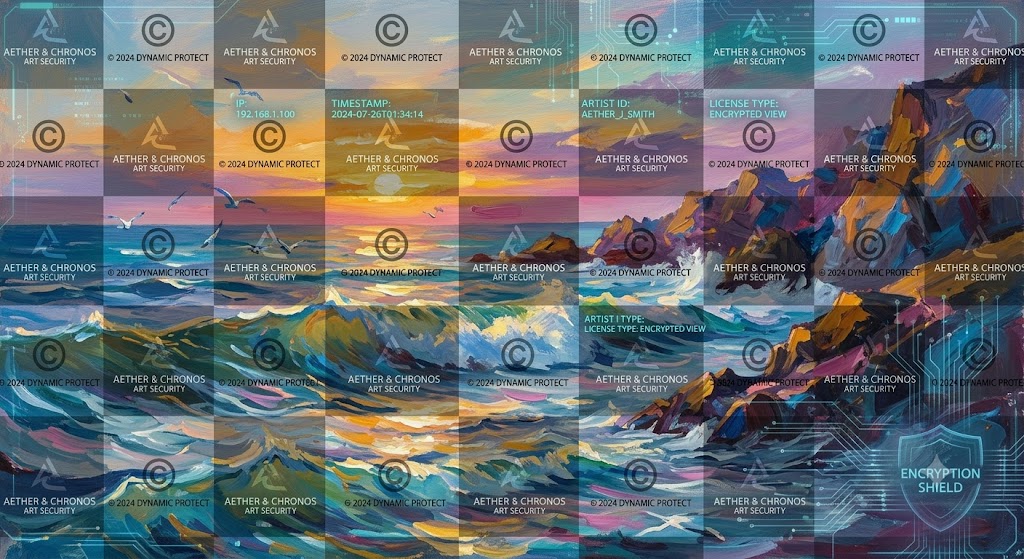
Securing Your Digital Artwork: Dynamic and Grid Watermarking Techniques
A highly detailed technical guide covering securing your digital artwork: dynamic and grid watermarking techniques. Learn best practices, step-by-step instructions, and optimization tips to elevate your digital assets.

How to Make a Professional Photo Collage for Marketing & Social Media
A highly detailed technical guide covering how to make a professional photo collage for marketing & social media. Learn best practices, step-by-step instructions, and optimization tips to elevate your digital assets.

Advanced Typography Overlays: Placing Text on Complex and Colorful Photographic Backgrounds
A highly detailed technical guide covering advanced typography overlays: placing text on complex and colorful photographic backgrounds. Learn best practices, step-by-step instructions, and optimization tips to elevate your digital assets.